Maintenance cost factors
What we can tell you is what drives the cost up or down: how many springs, whether the rollers are the original steel ones or have already been swapped to nylon, and whether the opener's gears and belt need attention too.
Durham, NC
Tune-ups for the 1980s-90s torsion hardware common across Durham's 30,000+ households, built for cold-moderate winters that stiffen springs and swell panels.
Pricing
We don't post a flat number here because what a maintenance visit runs depends on what's on the door. A basic tune-up on a single steel door with a working opener is a different job than one on a 1990s double door where the torsion spring has never been touched since the house was built.
What we can tell you is what drives the cost up or down: how many springs, whether the rollers are the original steel ones or have already been swapped to nylon, and whether the opener's gears and belt need attention too.
Across the roughly 9,094 owner-occupied houses in the service area, most of what we see dates to the 1967-2006 build window, with the heaviest concentration in 1980s-90s construction. That means a lot of doors are carrying 20 to 40 years of hardware that was fine when it went in but is now due for lubrication, balance checks, and cable inspection whether or not anything has failed yet.
A tune-up now is cheaper than an emergency spring call later, and we'll tell you honestly if a part is close enough to failing that fixing it today beats waiting.
Warning signs
If your door is from that same 1980s-90s era, the symptoms are predictable. The door is heavier to lift by hand than it used to be, the opener strains and makes a new grinding noise partway through the cycle, or the door shudders on one side as it travels.
Sometimes it's quieter than that: the door just doesn't sit flush at the bottom anymore, or one track shows daylight behind the roller when the other doesn't. These are balance and wear symptoms, not usually a door that's about to collapse.
But in a cold-moderate climate like Durham's, where winter temperature swings tighten steel and stiffen lubricant, a door that was merely sluggish in September can bind hard enough by January to snap a cable or strip an opener gear.
Across the seven named areas that make up most of the 1980s-90s stock here, we see this same pattern over and over: original hardware, decades of use, and a cold snap that finally exposes what was already wearing out.
Our process
A maintenance visit starts with the spring and cable, because those are what's holding the weight of the door and what fails dangerously if ignored.
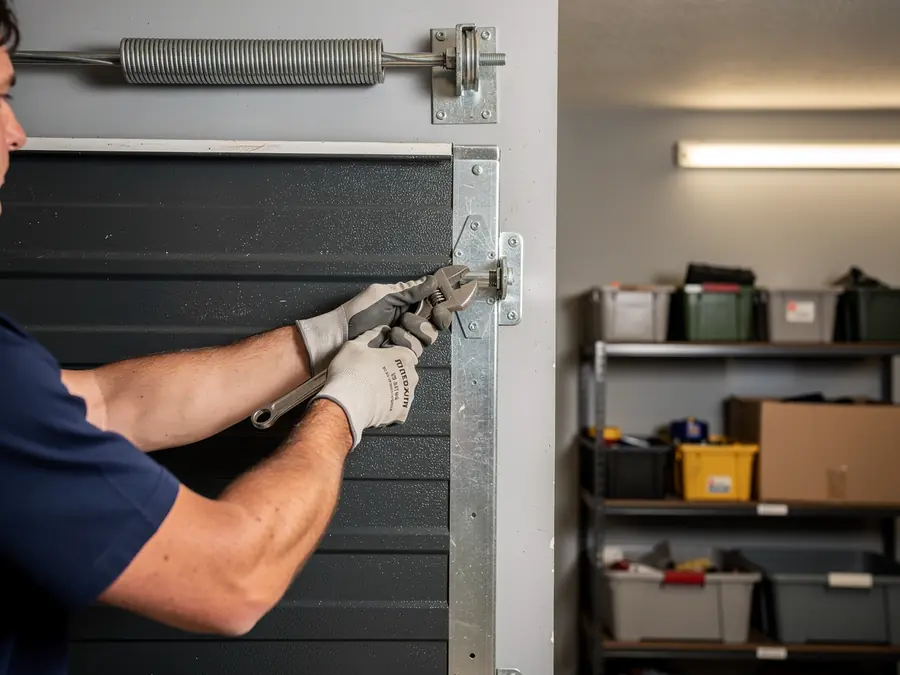
We check torsion spring tension against the door's actual weight, inspect cables for fraying at the drum, and look at the bottom brackets, which on original 1980s-90s hardware are often the same steel that went in at construction. From there we move to rollers, hinges, and track alignment, lubricating what should move freely and tightening what's worked loose.
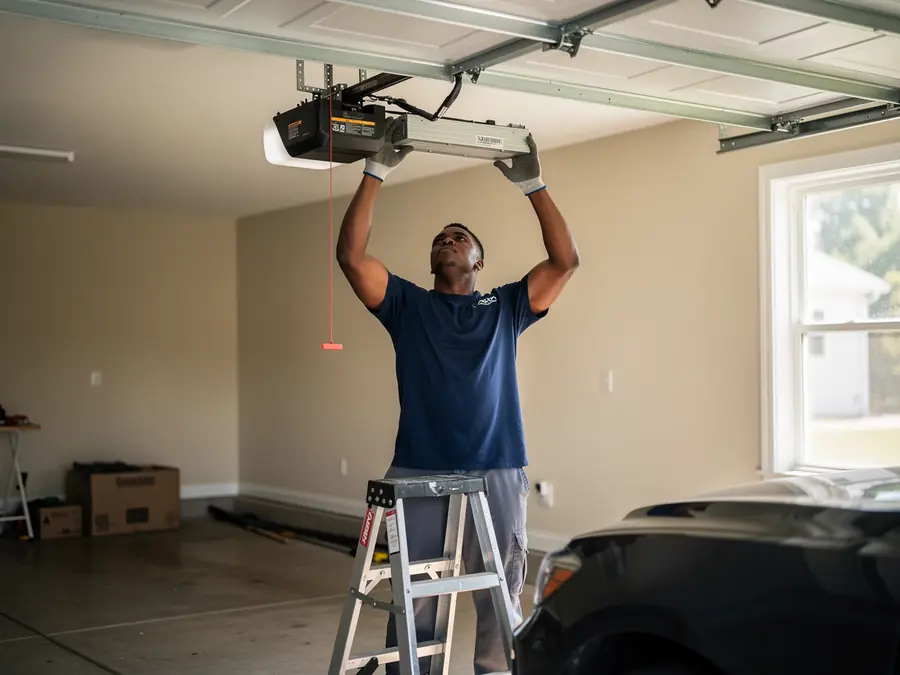
If the opener is original to the house, we check the gear kit, the belt or chain tension, and the safety reversal sensors, since those sensors are a common point of failure after this many years of vibration and temperature cycling. We don't replace parts that don't need replacing just to pad a visit.
If a roller is worn but not dangerous, we'll tell you it has another year or two in it rather than swap it preemptively. Where we do recommend replacement - usually springs or cables showing visible wear - we explain why before we do the work, not after.
Local causes
The root cause is simple: a lot of Durham-area garage doors are older than their owners think. With housing built mostly between 1967 and 2006, median year 1991, across the 30,655 households in this service area, the hardware on most doors predates a lot of the upgrades newer construction gets automatically - things like galvanized cable coating or sealed-bearing rollers.
The cold-moderate climate band adds a second layer. Steel springs and cables contract in cold weather, which increases tension on hardware that's already fatigued from decades of cycles. A spring that was fine in July can be the one that breaks in a January cold snap, simply because the metal is stiffer and the lubricant inside has thickened or dried out. That combination - old hardware, seasonal cold stress - is why maintenance timed before winter catches more problems than maintenance done after something already broke.
Questions
For a door on original 1980s-90s hardware, once a year is reasonable, ideally before the first cold stretch of the year since cold stiffens springs and thickens lubricant. Newer doors with updated rollers and sealed bearings can often go longer between visits.
Usually yes, up to a point. If the spring, cable, and bottom brackets are original to a 1980s-90s build and still intact, a tune-up extends their life. If we find cracked brackets or a visibly fraying cable, we'll tell you straight that replacement is the safer and often cheaper long-term call.
Cold makes steel stiffer and grease thicker, so an opener that's already working harder than it should because of a slightly unbalanced door will struggle more in winter. The grinding is usually the gear kit or belt fighting that extra resistance, not a sign the opener itself is failing.
Explore more
Ready when you are
Durham Garage Door Co repairs and installs garage doors, springs and openers in Durham, NC and the surrounding area.