The Situation
Durham's housing stock runs mostly from 1967 to 2006, with the median build year sitting at 1991. That means a lot of garage doors in this area went in before energy codes required real insulation in a garage door panel. Across the seven main areas we work in - places like Old West Durham, Croasdaile Farm Master, and Parkwood - the dominant stock is 1980s and 90s construction, and most of those doors are single-layer steel or hollow aluminum with no foam core at all.
If your house falls in that window, the door you're looking at right now was likely sized, hung, and insulated to a standard that nobody would build to today. That's not a defect, it's just the code of the year it went up. The spring and opener hardware on these doors is often original or close to it, which matters more than people think once a door is pushing 30 or 40 years old.
With roughly 9,094 owner-occupied houses across this service area, a large share of calls we get are for doors that were never built to hold heat in or keep driving rain out - because nobody asked them to at the time.
What Local Conditions Do
Durham sits in a cold-moderate climate band - real winter cold spells, but not the deep-freeze extremes you'd plan a whole building code around. That's part of why older doors here don't always get insulation, torsion spring upgrades, or weather seals added after the fact: the weather doesn't force the issue the way it would further north.
But cold-moderate still means freeze-thaw cycling through the winter months, and that's rough on an uninsulated steel panel with no thermal break. Panels flex more than people expect when the temperature swings 30 degrees in a day, and on a door built before insulation rules, that flex works on the seams and the weatherstrip channel first.
A single-layer door on a 1980s or 90s house also transfers more cold into an attached garage, which matters if the garage shares a wall with a bedroom or laundry room - common in this housing stock. You won't see it in a utility bill line item, but you'll feel it standing in the garage in January.
Season by Season
Winter is when an old, uninsulated door shows its age the most. Freeze-thaw cycling loosens fasteners on the track brackets and stiffens lubricant on springs that haven't been serviced. If your house dates to the 1967-2006 window, that spring is doing the same job it did the day it was installed, with none of the slack a newer torsion system gives you.
Spring and fall bring the biggest day-to-night temperature swings, and that's when panel seams on an older door open up the most - not from storm damage, just from metal expanding and contracting without insulation to buffer it.
Summer is gentler on these doors structurally, but it's when homeowners notice the heat radiating off an uninsulated panel into the garage. That's a comfort problem, not a safety one, and it's the easiest season to put off dealing with it - which is usually how a door makes it another ten years past when it should've been replaced.
When It Stops Being a DIY Job
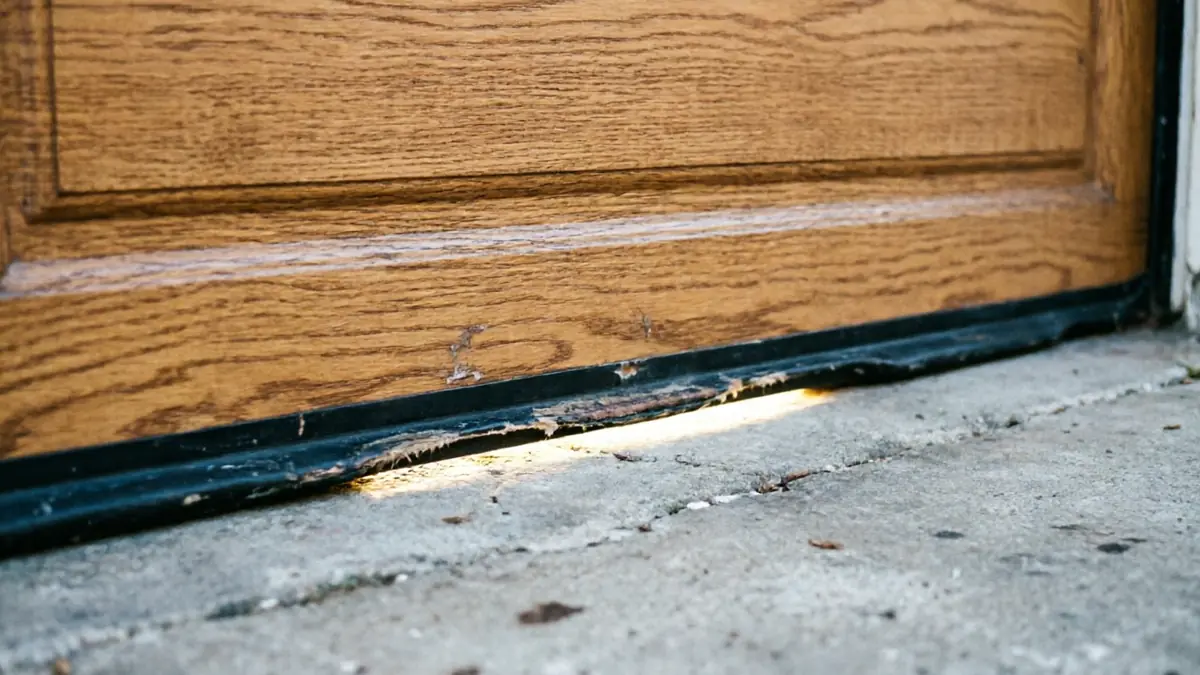
We'll be straight with you: weatherstripping and a tube of lubricant will buy you some time on a door from this era, and plenty of homeowners handle that themselves. What you shouldn't touch yourself is the torsion spring itself - on a door this old, the spring has outlived its rated cycle count and nobody can tell you from the driveway how much tension is left in it.
If your house is in the 1967-1991 range and the door has never been insulated or resprung, replacement usually makes more sense than a repair, especially once you're also dealing with original hardware. We don't carry every obsolete bracket and drum size that 1980s-era doors used, and tracking one down can take longer than most people expect - that's the honest limitation here, not every original part is still in supply.
If the panel is cracking at the seams or the door is noticeably cold to the touch in January, that's past a weatherstrip fix.
Talk to a local pro
Garage door trouble in Durham?
Same-day service with honest, upfront quotes.