Cost drivers explained
What we can tell you is what drives the cost: whether the spring, cable, or opener failed; whether the track or hinges bent when it happened; and whether the door is original to the house or a replacement already put in.
Durham, NC
Fast emergency garage door repair across Durham, NC - broken springs, stuck openers, and off-track doors common in homes built 1967-2006.
Pricing
We can't quote a number here because every emergency call is different - a snapped torsion spring on a single door is a different job than a cable that's jumped the drum on a double door, and a door that's been dragged off its track by a kid's bumper is different again.
What we can tell you is what drives the cost: whether the spring, cable, or opener failed; whether the track or hinges bent when it happened; and whether the door is original to the house or a replacement already put in.
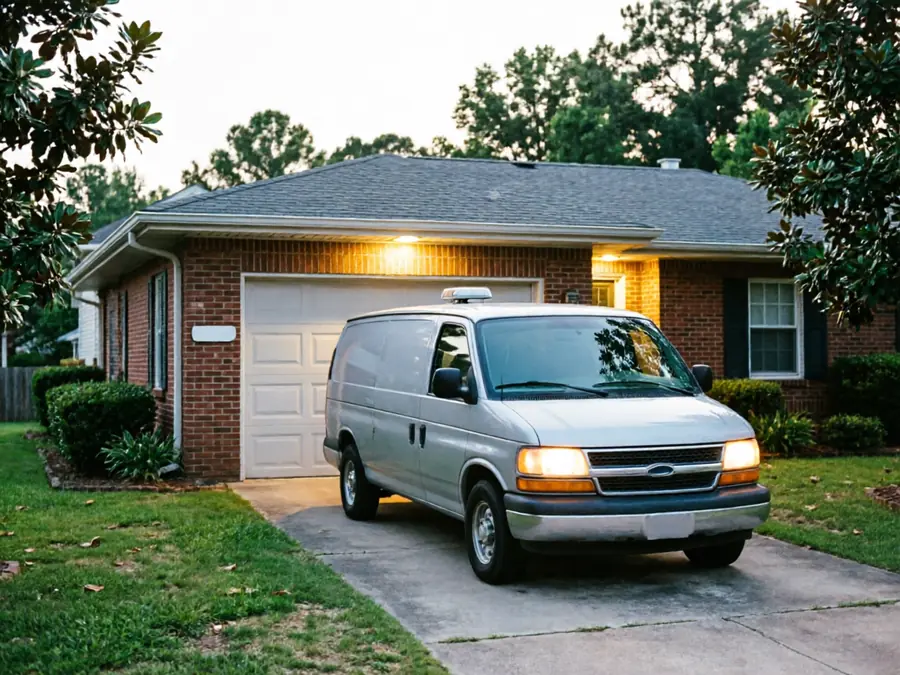
Homes across Durham's service area - from the 1-mile Downtown core out to Gorman and Efland - run anywhere from late-1960s builds to houses finished around 2006, so parts availability varies a lot by what's actually on the door. An original spring from a house built in the early 1990s is a common size we stock on the truck.
A dented aluminum panel from a custom build is a special order, and we'll tell you that on the phone before we drive out, not after. If a repair is going to cost close to what a new opener or door runs, we say so plainly. We'd rather lose an upsell than let you spend money chasing a door that's done.
Warning signs
Most emergency calls in this area come down to three things: a spring that let go with a bang, a door that won't move at all, or a door that's hanging crooked on one side. The bang-and-stop is almost always a broken torsion spring - the door feels like it weighs 400 pounds because, without the spring, it does. A door that hums but doesn't move is usually the opener trying and failing against a jammed track or a stripped gear. A door hanging crooked, lower on one side, points to a snapped cable or a roller that's finally quit after decades of use. Houses across Durham's service area - the 7 named pockets of mostly 1980s and 90s stock, median build year 1991 - tend to show these failures together because the garage door hardware installed then is reaching the end of its working life at roughly the same time. If your door was quiet last week and loud and stuck this week, that's consistent with a spring finally fatiguing rather than a sudden one-off accident.
Our process
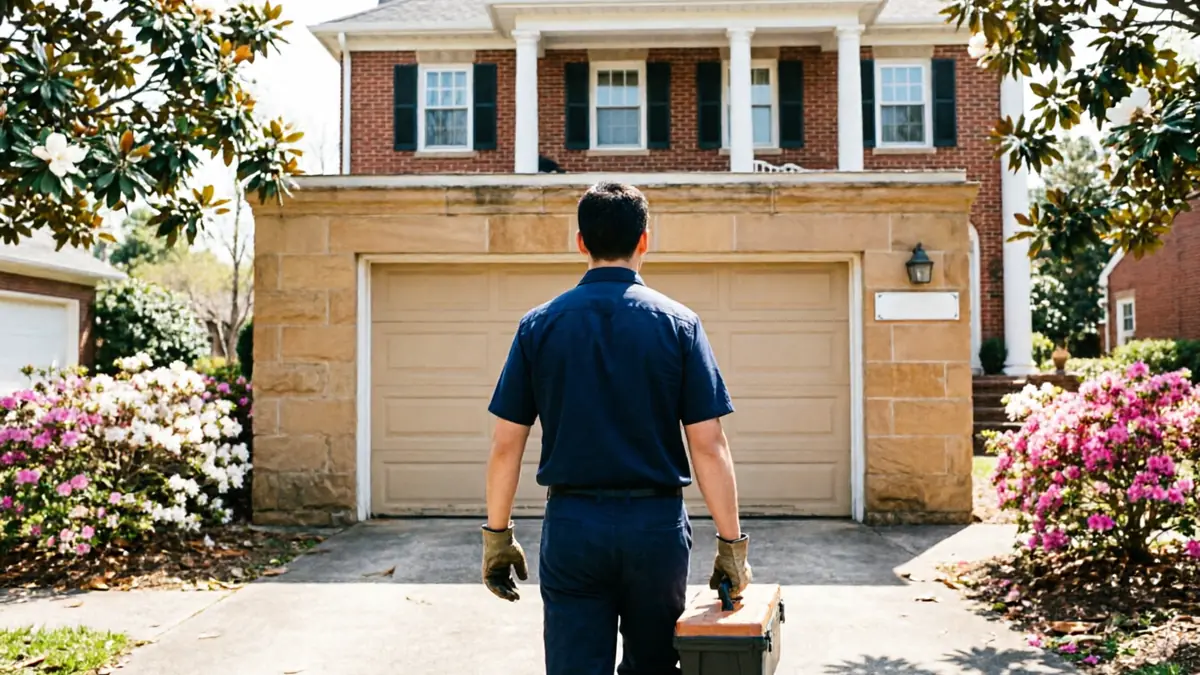
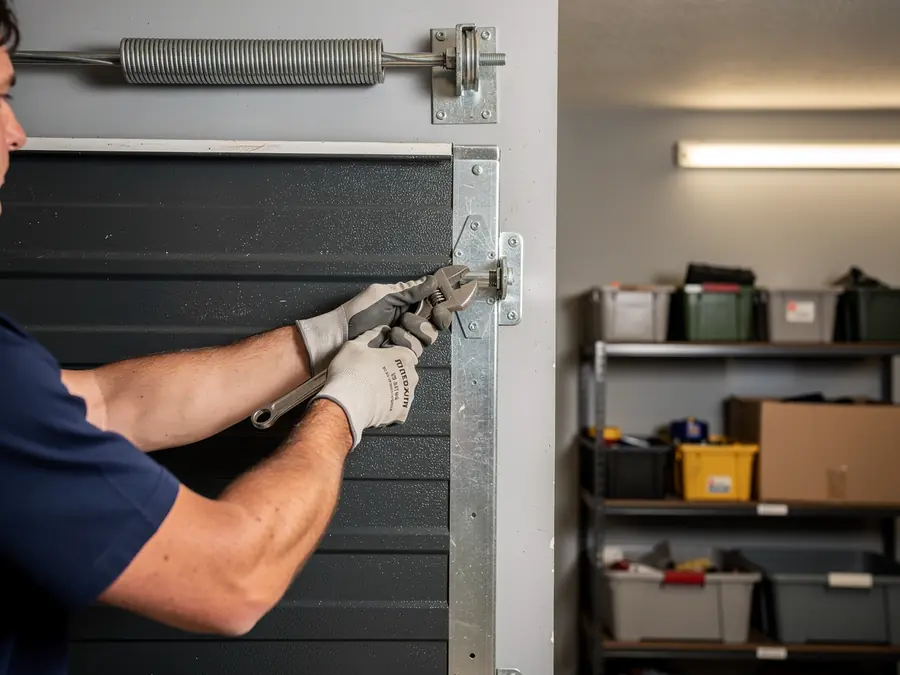
For a broken spring, we size and replace it to match the door's weight and the opener's lift capacity - we don't reuse a stretched or mismatched spring to save a trip.
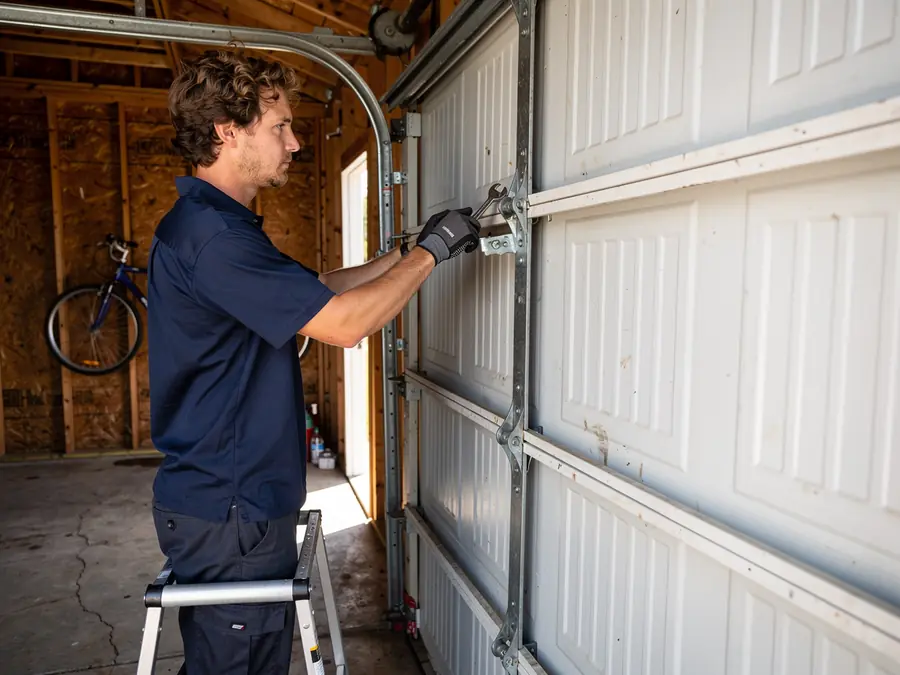
For a jumped or snapped cable, we replace the cable and check the drum and bottom bracket for wear at the same time, since a cable rarely fails alone. For a door off track, we check whether the track itself bent or whether a roller gave out first; a bent track gets straightened or replaced depending on how far it's pulled from the wall.
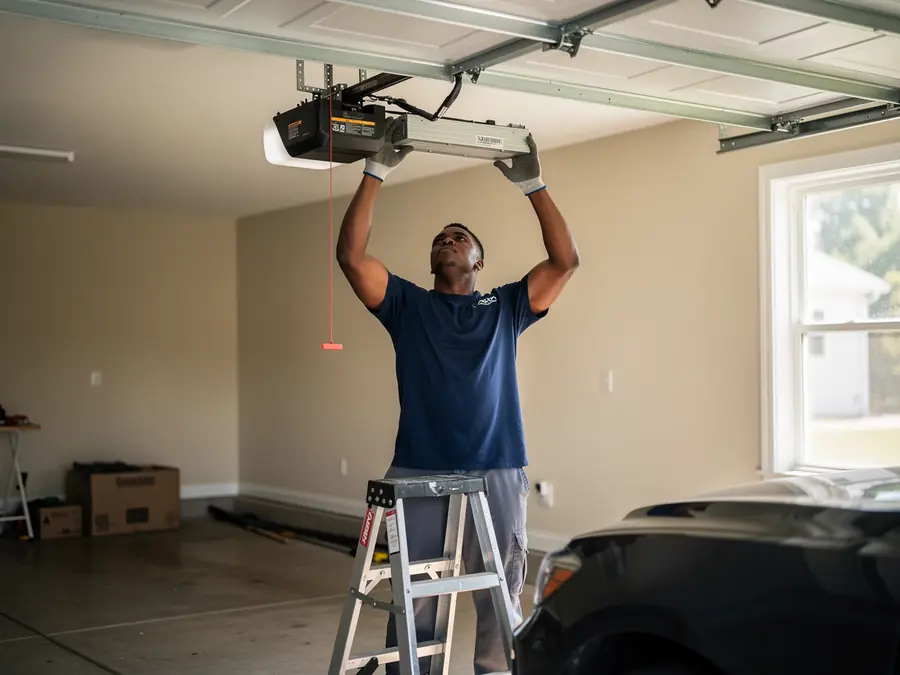
On openers that hum without moving the door, we check the gear and sprocket before assuming the motor's dead - a stripped plastic gear is a cheaper fix than a new opener and we'll always check that first.
One honest limit: if a door is original to a house built in the 1960s or 70s and the track hardware is no longer made, we'll tell you straight that a full replacement is the faster, more reliable path rather than hunting discontinued parts.
Local causes
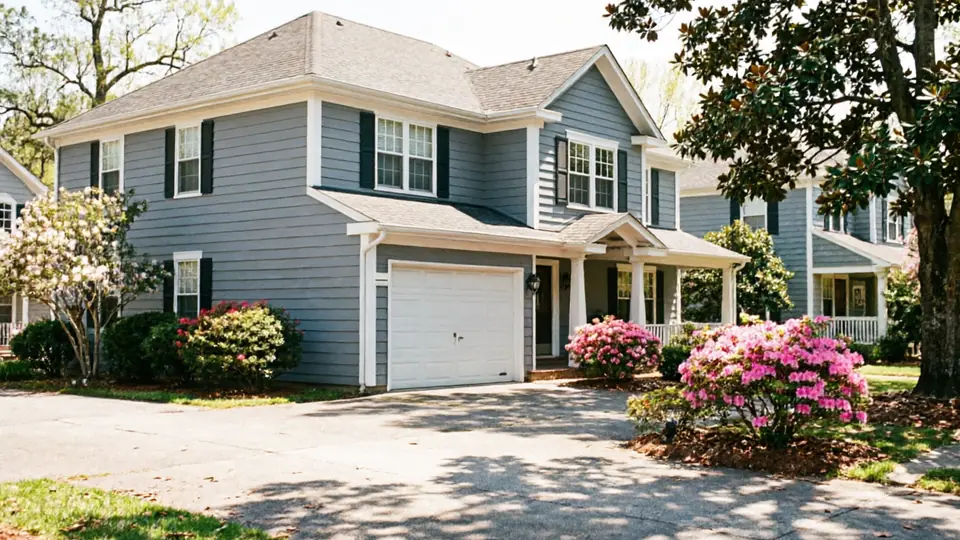
Durham's service area runs a cold-moderate climate, and most of the housing stock here went up between 1967 and 2006, with the bulk of it clustered in the 1980s and 90s across the seven named pockets we see most calls from. That combination matters. Steel springs and cables that have been cycling through cold winters and humid summers for 30-plus years are simply at the end of their rated life cycles, which is why late fall and early winter bring a jump in spring failures - cold steel is less forgiving right as the door's been doing the most work of the year. Garages built in that era also tend to have single torsion springs rather than the dual-spring setups common in newer construction, so when that one spring goes, the door is fully immobile rather than just stiff. With close to 9,100 owner-occupied houses and over 30,600 households across the area, we see the same failure pattern repeat across Downtown, East Durham, Duke Forest, and the farther pockets near Gorman and Hillsborough - it's the age of the hardware, not the neighborhood, that decides when the call comes in.
Questions
We don't quote a blanket response time because it depends on where you are in the service area and what else is on the schedule that day. Call and we'll give you a realistic window for your specific location before you commit.
If the opener motor runs but the door doesn't move, that often points to a stripped gear or a jammed track rather than the spring. If the door won't budge even by hand and feels heavy, that's a strong sign the spring itself has broken.
No. A loud bang is almost always a spring breaking under tension, and the door can drop suddenly if you force it by hand or with the opener. Leave it closed, disconnect the opener if you can do so safely, and call.
Most of the housing stock here was built between 1967 and 2006, with a lot of it from the 1980s and 90s, when single torsion spring setups were standard on residential doors. Newer builds elsewhere often use dual springs, but that's not what's on most doors here.
Explore more
Ready when you are
Durham Garage Door Co repairs and installs garage doors, springs and openers in Durham, NC and the surrounding area.